

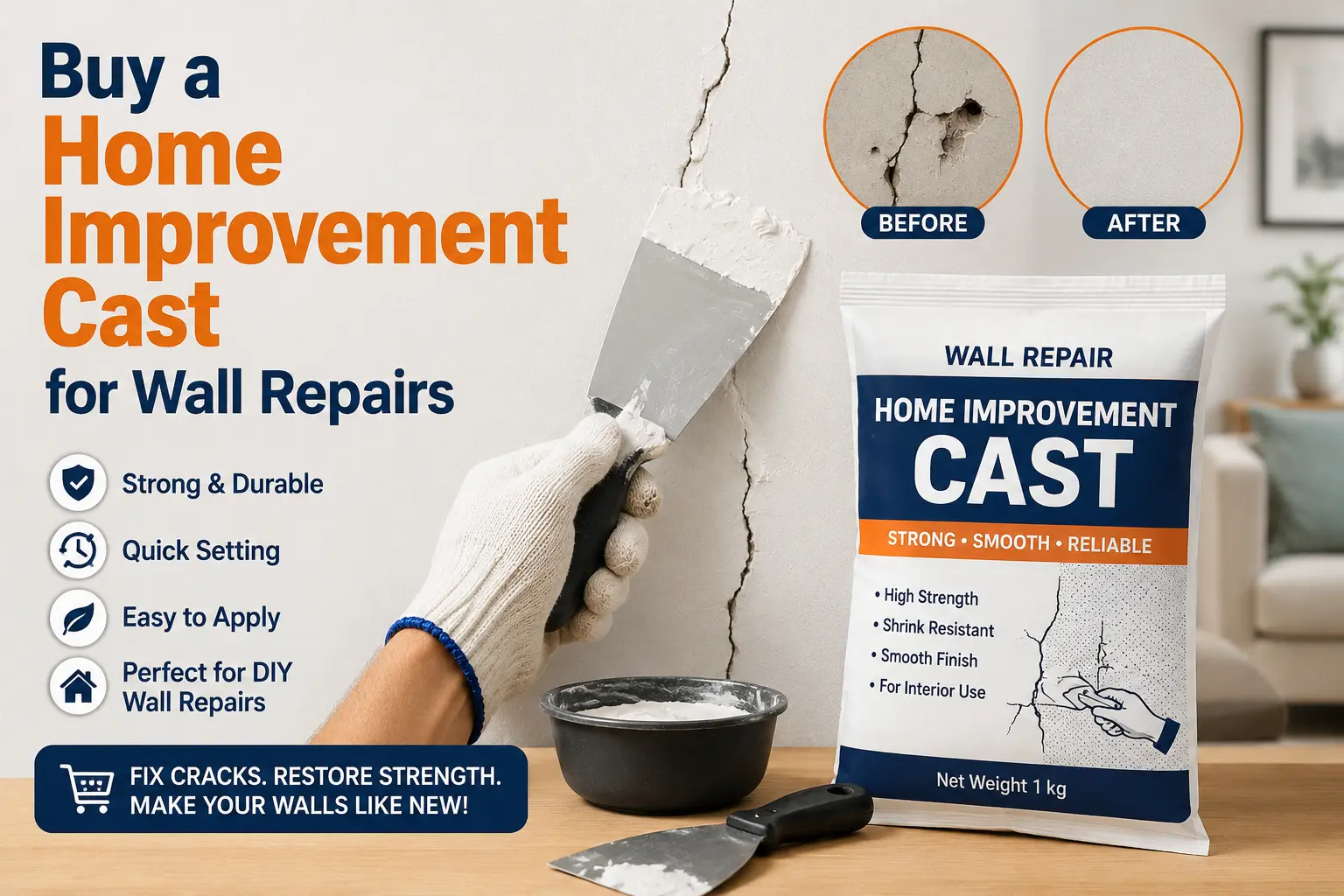
A hole in the wall can ruin the look of a nice room. Maybe a door handle hit the plaster. Maybe a picture frame fell and left a deep dent. Maybe water caused a crack that keeps getting bigger. Whatever the reason, you want to fix it fast, and you want the fix to look neat.
The first big question most people ask is simple: where to buy a home improvement cast for wall repairs? The answer is not hard, but there are many choices. You can shop at big home improvement stores, small hardware shops, paint stores, and online marketplaces. Each place has good points and weak points.
In this guide, we’ll explain everything in plain terms. You will learn what a wall repair cast is, which types exist, where to buy one, what to check before you pay, and how to use it the right way. By the end, you will feel ready to pick the right product and fix your wall like a pro.
What Is a Home Improvement Cast for Wall Repairs?
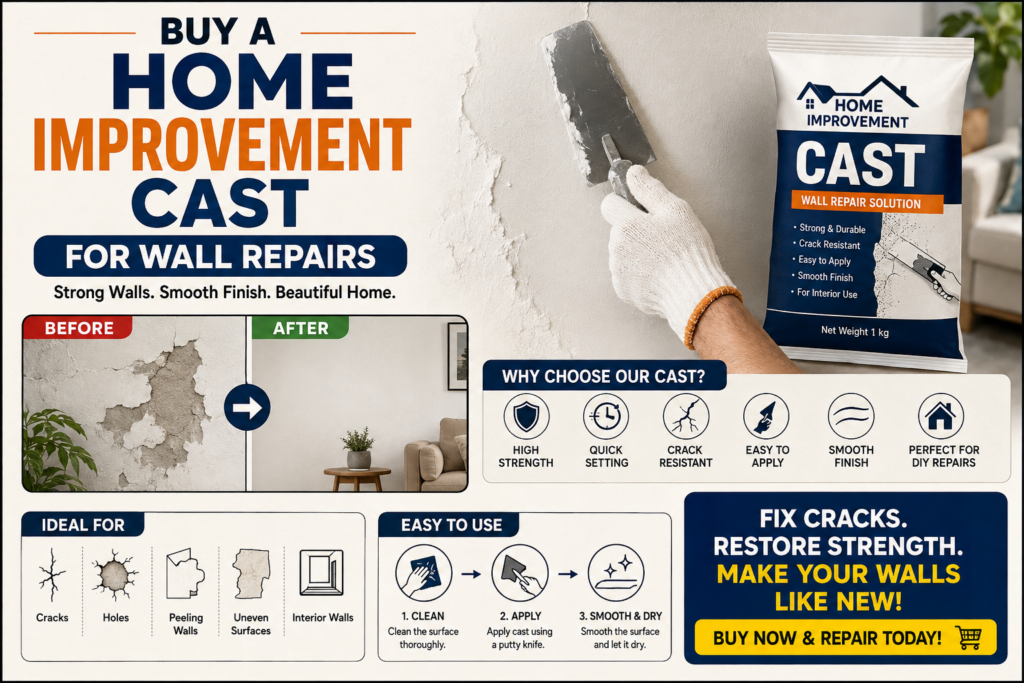
The words “home improvement cast” can mean a few things, depending on who you ask. In most shops, people use the term for a repair material that you shape, fill, or set into a damaged wall. Think of it like a cast on a broken arm. It holds the broken part in place, fills the gap, and lets the wall heal into one smooth surface.
A wall repair cast can be:
- A plaster-based mix that you blend with water and press into a hole or crack.
- A ready-to-use paste or patch compound that comes in a tub or tube.
- A mesh or self-stick patch that covers a hole before you add filler on top.
- A plaster of Paris style powder that sets hard and can be sanded smooth.
- A repair kit that bundles filler, a scraper, and sometimes sandpaper in one box.
Because the name is not the same in every store, you may need to ask for it in different ways. Try words like “wall repair kit,” “patching plaster,” “drywall patch,” “spackle,” “wall filler,” or “crack filler.” Shop staff will know what you mean as soon as you describe the damage.
Why a Good Wall Repair Cast Matters
It is tempting to grab the cheapest tub and hope for the best. But the product you pick changes how the wall looks months later. A weak filler can shrink, crack again, or show through the paint. A strong cast stays firm, sands smooth, and takes paint well.
Here is what a good wall repair product gives you:
- A smooth finish that hides the damage once painted.
- Strong hold so the repair does not fall out or crack again.
- Less work because it spreads easily and sands quickly.
- Better value since you do the job once instead of three times.
That is why knowing where to buy a home improvement cast for wall repairs, and how to judge the quality, is worth a few minutes of your time.
Types of Wall Repair Products You Will See in Stores
Before we talk about where to shop, let us look at what is on the shelf. Knowing the types helps you ask the right questions and avoid buying the wrong thing.
1. Spackle and Lightweight Filler
Spackle is a soft paste for small jobs. It is great for nail holes, small dents, and tiny scratches. It is easy to spread and dries fast. Many versions change color when dry, so you know when it is ready to sand. It is not the best choice for big holes.
2. Joint Compound
Joint compound, sometimes called “mud,” is a thicker paste used on drywall seams and medium repairs. It works well when you need to build up layers. It takes longer to dry, but it sands very smooth.
3. Patching Plaster and Plaster of Paris
Plaster powders mix with water and set hard. These are the closest match to the word “cast” because they harden into a firm shape. They are good for older plaster walls, deep cracks, and larger holes. You need to work fast because the mix starts to set quickly.
4. Self-Stick Mesh Patches
These are thin sheets with sticky backs. You place one over a hole, then cover it with filler. They are perfect for holes the size of a fist or smaller, such as a doorknob dent.
5. Metal or Plastic Patch Kits
For bigger holes, some kits include a stiff patch with a mesh edge. The firm center gives the filler something to hold on to, so the repair stays flat.
6. Plaster Repair Systems for Loose Walls
Old plaster walls sometimes come loose from the lath or wall base behind them. Special repair kits use adhesive and small clamps to pull the loose plaster back in place. One popular homeowner pack from a plaster repair brand is listed as covering about nine linear feet of cracks or about thirty square feet of loose plaster, which shows how these kits are sized for small to medium jobs.
7. Texture Sprays
If your wall has a rough or patterned finish, a smooth patch will stand out. Texture sprays help you match the surface. One well-known maker of these products says it has served pros and do-it-yourself fans for over twenty-five years and sells aerosol textures made to blend repairs into the wall.
Where to Buy a Home Improvement Cast for Wall Repairs
Now for the main question. Here are the best places to look, with simple pros and cons for each.
Big Home Improvement Stores
Large home improvement chains are often the first stop. They carry a wide range of wall repair products in one aisle: spackle, joint compound, patch kits, mesh tape, sandpaper, and tools.
Good points:
- You can see and touch the product before you buy.
- Many brands sit side by side, so comparing is easy.
- Staff can often point you to the right item.
- Returns are usually simple. One major U.S. chain, for example, lists a 90-day return window on many items.
- You can pick up the scraper, sandpaper, and paint in the same trip.
Weak points:
- Prices can be higher than online for some items.
- Stock can run low. Some listings show that a product is not in stock at a nearby store, so check first.
Tip: Check the store’s website before you go. Most chains let you search by store and see if the item is in stock.
Local Hardware Shops
Small hardware stores are an underrated place to shop. The owner or staff often know a lot about wall problems in your area, such as damp walls or old plaster.
Good points:
- Friendly, hands-on advice.
- You can buy a small amount instead of a big tub.
- Quick trip, little waiting.
Weak points:
- A smaller range of brands.
- Prices may be slightly higher on branded kits.
If you are not sure what your damage needs, a local shop is a great place to describe the problem and ask for advice.
Paint and Building Supply Stores
Paint shops often sell patching compounds, primers, and texture products because wall repair and painting go hand in hand. Building supply stores, on the other hand, are good for bigger bags of plaster powder and joint compound at lower cost per kilo.
Good points:
- Strong choice for plaster powders and bulk buys.
- Staff often know which primer works best on top of your repair.
- Good place to match paint colors after the patch is done.
Weak points:
- Pack sizes can be too large for a tiny job.
Online Marketplaces and Retail Sites
Buying online is easy and often cheaper. Large retail websites list many wall repair kits, from basic spackle tubs to full patch kits that include a scraper and gloves. A typical kit listed online costs under twenty dollars in some stores, while others cost more depending on size and brand.
Good points:
- A huge range of choices.
- Easy to compare prices and read reviews.
- Delivery to your door.
Weak points:
- You cannot check the texture or smell before you buy.
- Delivery may take several days.
- Some listings use vague names, so read the product details with care.
Tip: Look for kits with many reviews and clear photos. Be careful with products that make big promises but give few details about what is inside.
Direct From the Brand
Some makers have a “Where to Buy” page on their own website. This is a handy way to find stores near you that stock their products. For example, a large maker of tapes, abrasives, and hanging products has a page to help shoppers find its home improvement range, with separate paths for do-it-yourself buyers and professional painters and decorators. A texture and patch brand also lists where its products are sold at local stores.
Good points:
- You know the product is real and not a copy.
- Help from the brand’s support team if you have questions.
Weak points:
- You are limited to one brand.
Trade and Contractor Suppliers
If you plan a big repair job, such as fixing several walls after a leak, a trade supplier can be a smart choice. They sell professional grade plaster, joint compound, and tools, often in bulk.
Good points:
- Pro quality materials.
- Better price per kilo for large jobs.
Weak points:
- Some require a trade account or sell only in large amounts.
Online vs In-Store: Which Is Better?
Both ways work well. The best choice depends on your job and your timing.
Choose in-store if:
- You need the product today.
- You are not sure which type to buy.
- You want to compare products side by side.
- You may need to return the item.
Choose online if:
- You want the widest choice.
- You like reading reviews before you buy.
- You are not in a rush.
- You want a bundled kit with tools included.
Many people use both. They read reviews online, then go to a store to pick up the product. Others check the store shelf, then order online to save money.
What to Check Before You Buy
Once you know where to buy a home improvement cast for wall repairs, the next step is picking a good one. Use this simple checklist.
1. Match the Product to the Damage
- Nail holes and small dents: lightweight spackle.
- Cracks: flexible crack filler or patching plaster.
- Holes the size of a coin to a fist: self-stick mesh patch plus joint compound.
- Large holes: a rigid patch kit or a piece of new drywall.
- Loose old plaster: a plaster repair system with adhesive.
2. Check the Wall Type
Is your wall drywall, plaster, brick, or concrete? Some products work on many surfaces, while others are made for one type. The label will tell you. If it does not, ask the seller.
3. Look at the Drying Time
Some fillers dry in under an hour. Others need several hours or even a full day for thick layers. One wall paste listed online says it can dry in around four hours, depending on the weather. If you are in a hurry, pick a fast-dry product. If you want a smoother finish and have time, a slower product may sand better.
4. Read What Is in the Box
A kit with a scraper, sandpaper, and gloves saves you extra trips. But read carefully. One shopper review of a plaster repair pack warned that a certain kit gave less value than buying several smaller starter packs. Reviews like this can save you money.
5. Check the Size
Buying too little means a second trip. Buying too much wastes money. Look at the coverage listed on the pack. Many kits tell you how many holes or how many square feet they cover.
6. Look at Safety and Smell
If you are working in a closed room or around kids and pets, look for low-odor products. Some labels say they are free of harsh chemicals such as formaldehyde. Always wear gloves, and wear a dust mask when you sand.
7. Read the Reviews
Look for reviews from people with a similar problem. Do they say the filler cracked? Did it shrink? Was it easy to sand? Honest reviews tell you more than the product title.
8. Check the Return Policy
If the product does not work, can you return it? Stores with clear return rules give you more peace of mind.
How Much Should You Expect to Pay?
Prices change by country, brand, and store. Still, here is a rough idea of what to expect:
- Small tubs of spackle: the cheapest option, good for tiny holes.
- Basic repair kits with a scraper: a mid-range price, good for a few small repairs.
- Bags of plaster powder: low cost per kilo, best for bigger jobs.
- Specialty plaster repair systems: a higher price because they include adhesive and special parts.
Do not choose only by price. A very cheap filler that cracks in a month costs more in the end than a good product that lasts for years.
Tools You Should Buy at the Same Time
The cast or filler is only half of the job. Pick up these items on the same trip so you do not have to stop mid-repair:
- Putty knife or wall scraper in two sizes, small and wide.
- Sandpaper in fine and medium grit, or a sanding sponge.
- Mesh tape or patch for cracks and holes.
- Primer to seal the repair before painting.
- Paint and a small brush or roller to finish the job.
- Dust mask and gloves for safety.
- Drop cloth to protect the floor.
- A damp sponge to clean up edges.
How to Use a Wall Repair Cast: Step by Step
Here is a simple method you can follow for most small and medium wall repairs.
Step 1: Clean the Area
Wipe away dust, loose paint, and crumbs of old plaster. Use a scraper to knock off anything that is flaking. Fillers stick best to a clean, dry surface.
Step 2: Prepare the Damage
For cracks, widen them a little with the edge of a scraper so the filler can grip. For holes, trim any rough or hanging edges. If the wall is old and loose, tap around the area to find weak spots.
Step 3: Add a Patch if Needed
For a bigger hole, press a self-stick mesh patch over it. Smooth the edges flat so they do not stick out.
Step 4: Mix or Open Your Filler
If you use plaster powder, add water slowly and stir to a thick, smooth paste like soft peanut butter. Mix only what you can use in a few minutes, because it sets fast. If you use a ready-made paste, stir it lightly and scoop out a small amount.
Step 5: Apply the First Layer
Press the filler into the damage with your putty knife. Push it in firmly so there are no air gaps. Then scrape across the surface to leave it almost level with the wall.
If you use a caulk-style tube, hold the gun with two hands and keep the tube tight against the wall. This helps you avoid squeezing out too much product. This tip comes from a user review of a plaster repair kit and works well with many tube products.
Step 6: Let It Dry
Follow the drying time on the label. Do not rush. If you sand too early, the filler may tear or leave holes.
Step 7: Add More Layers if Needed
Most fillers shrink a little as they dry. A second thin layer fixes this. It is better to add two thin layers than one thick layer, because thick layers can crack.
Step 8: Sand Smooth
Once fully dry, sand gently with fine sandpaper in small circles. Run your hand across the area. If you cannot feel the edge of the repair, you are ready for the next step. Wipe away the dust with a damp cloth.
Step 9: Match the Texture
If your wall has a texture, use a texture spray or a thin layer of textured compound to match it. Practice on cardboard first.
Step 10: Prime and Paint
Always prime a repair. Without primer, the patch soaks up paint differently and shows as a dull spot. After the primer dries, paint the whole wall section, from corner to corner, for the best look.
Common Mistakes to Avoid
Even a great product will fail if you make a few common mistakes. Watch out for these:
- Using the wrong product: A light spackle will not hold up in a big hole.
- Skipping the cleaning step: Dust and loose paint stop the filler from sticking.
- Applying one thick layer: Thick layers crack and shrink. Use thin ones.
- Sanding too soon: Wait until the patch is fully dry.
- Forgetting primer: The patch will show through the paint.
- Ignoring the cause: If a crack or stain keeps coming back, there may be a leak or a moving wall. Fix the cause first, then repair the wall.
- Mixing too much plaster: It will harden in the bucket before you can use it.
Smart Ways to Save Money
You do not need to spend a lot to get a good result. Try these ideas:
- Buy a kit only if you need the tools: If you already own a scraper and sandpaper, buy just the filler.
- Pick the right size: A small tub is enough for nail holes.
- Compare prices: Check a big store, a local shop, and one online site before you pay.
- Watch for sales: Home improvement stores often run discounts on repair items.
- Buy in bulk for big jobs: Plaster powder is much cheaper per kilo in a large bag.
- Store leftovers well: Seal tubs tightly so the filler does not dry out.
Safety Tips for Wall Repair
Wall repair is a simple job, but a few safety steps keep you comfortable:
- Wear gloves: Some pastes and plasters can dry out or irritate skin.
- Wear a dust mask when sanding: Fine dust is not good to breathe.
- Open a window: Fresh air helps with smell and drying.
- Keep kids and pets away: Store products on a high shelf.
- Be careful with older homes: Very old paint or plaster may contain harmful materials. If your home is very old, get advice before sanding.
When to Call a Professional
Most small repairs are easy to do yourself. But call a pro if:
- The damage is very large, such as a whole section of wall.
- You see wide cracks that keep growing.
- The wall is wet, soft, or has mold.
- You see cracks above doors or windows that spread across the wall.
- You are not sure the wall is safe.
A professional can find the root cause and fix it for good.
Frequently Asked Questions
Where is the best place to buy a home improvement cast for wall repairs?
There is no single best place. Big home improvement stores are great for choice and quick pickup. Local hardware shops give friendly advice. Online stores offer the widest range and easy price checks. Pick the one that fits your timing and budget.
What should I ask for in a shop?
Try “wall repair kit,” “patching plaster,” “spackle,” “joint compound,” or “crack filler.” Describe your damage, and the staff can point you to the right item.
Is plaster of Paris good for wall repairs?
Yes, for many jobs. It sets hard and fast, which is great for filling deep cracks and holes. But you must work quickly, and it can be harder to sand than lighter fillers. For tiny holes, spackle is easier.
Can I use a wall repair cast on any wall?
Not always. Check the label for the wall types it supports, such as drywall, plaster, or masonry. If you are unsure, ask the seller or check the brand’s website.
How long does a wall repair take to dry?
It depends on the product and the thickness. Small patches may dry within an hour. Thicker repairs can take several hours or overnight. Always follow the label.
Do I need to prime after repairing a wall?
Yes. Primer seals the patch and helps the paint look even. Skipping it often leaves a dull spot.
Is it cheaper to buy online?
Often, yes, but not always. Delivery costs and waiting time can cancel out the savings. Compare the total price, not only the item price.
How do I know if a product is good?
Read reviews from real buyers, check the coverage listed on the pack, and look at the return policy. Well-known brands with clear instructions are usually a safer pick.
How much product do I need?
For a few nail holes, a small tub is plenty. For a fist-size hole or a long crack, buy a kit or a medium tub. For several walls, buy a bag of plaster or a large bucket of joint compound.
Can I fix a large hole myself?
Yes, if you are patient. Use a rigid patch kit or cut a new piece of drywall to fit. Then fill the edges, sand, prime, and paint. If the wall is damaged by water, find and stop the leak first.
Quick Buying Checklist
Before you pay, run through this short list:
- Does the product match my damage size?
- Does it work on my wall type?
- Is the drying time right for my schedule?
- Does the kit include the tools I need?
- Have I read a few honest reviews?
- Do I know the return rules?
- Did I add primer, sandpaper, and paint to my cart?
Final Thoughts
Fixing a damaged wall does not have to be stressful. Once you know where to buy a home improvement cast for wall repairs, the rest becomes simple. Big home improvement stores give you choice and fast pickup. Local hardware shops give you friendly advice. Paint and building supply stores are great for plaster and bulk buys. Online sites give you the widest range and easy comparison. Brand websites help you find real products near you.
Whichever place you choose, match the product to the damage, check the label and reviews, and buy the few extra tools you need. Take your time with the steps: clean, fill in thin layers, sand, prime, and paint. Do this, and your wall will look smooth and fresh, as if the damage never happened.
Ready to start? Make a short list of the damage in your home, pick your store, and grab your kit. A better-looking wall is just a weekend away.
