

Introduction
Your living room is one of the most important spaces in your home. It is where you relax after a busy day, welcome guests, spend time with family, and enjoy your favorite activities. While furniture, lighting, and flooring all influence the appearance of this space, the walls also play a major role in creating a comfortable and attractive environment.
The right living room wall decor can transform an ordinary room into a welcoming and stylish place. You do not need expensive artwork, custom furniture, or a complete renovation to achieve a beautiful result. Simple changes, such as hanging framed prints, installing floating shelves, adding a decorative mirror, or painting an accent wall, can make a noticeable difference.
However, choosing the right decorations requires some planning. Your wall size, furniture arrangement, natural light, color palette, and personal style all influence which ideas will work best.
In this guide, you will discover 25 practical living room wall decorating ideas for different budgets, room sizes, and interior design styles. You will also learn how to arrange wall art, select suitable colors, avoid common decorating mistakes, and create a balanced look that feels personal rather than cluttered.
Why Living Room Wall Decor Matters
Empty walls can make a room feel unfinished, especially when the furniture and accessories are carefully arranged. Wall decorations help connect different elements of a room and create a more complete design.
Good wall decoration can also introduce color, texture, personality, and visual interest without taking up valuable floor space.
For example, a large painting above a sofa can establish a focal point. A mirror can reflect natural light and make a compact room feel more open. Floating shelves can display books, plants, and treasured objects while providing additional storage.
Wall decorations can also communicate your personal interests. Family photographs, travel pictures, handmade artwork, and meaningful objects make a living room feel unique.
The goal is not to cover every available surface. Instead, choose decorations that complement your furniture, support your preferred style, and make the room comfortable to use.
25 Living Room Wall Decor Ideas to Transform Your Space
1. Create a Gallery Wall
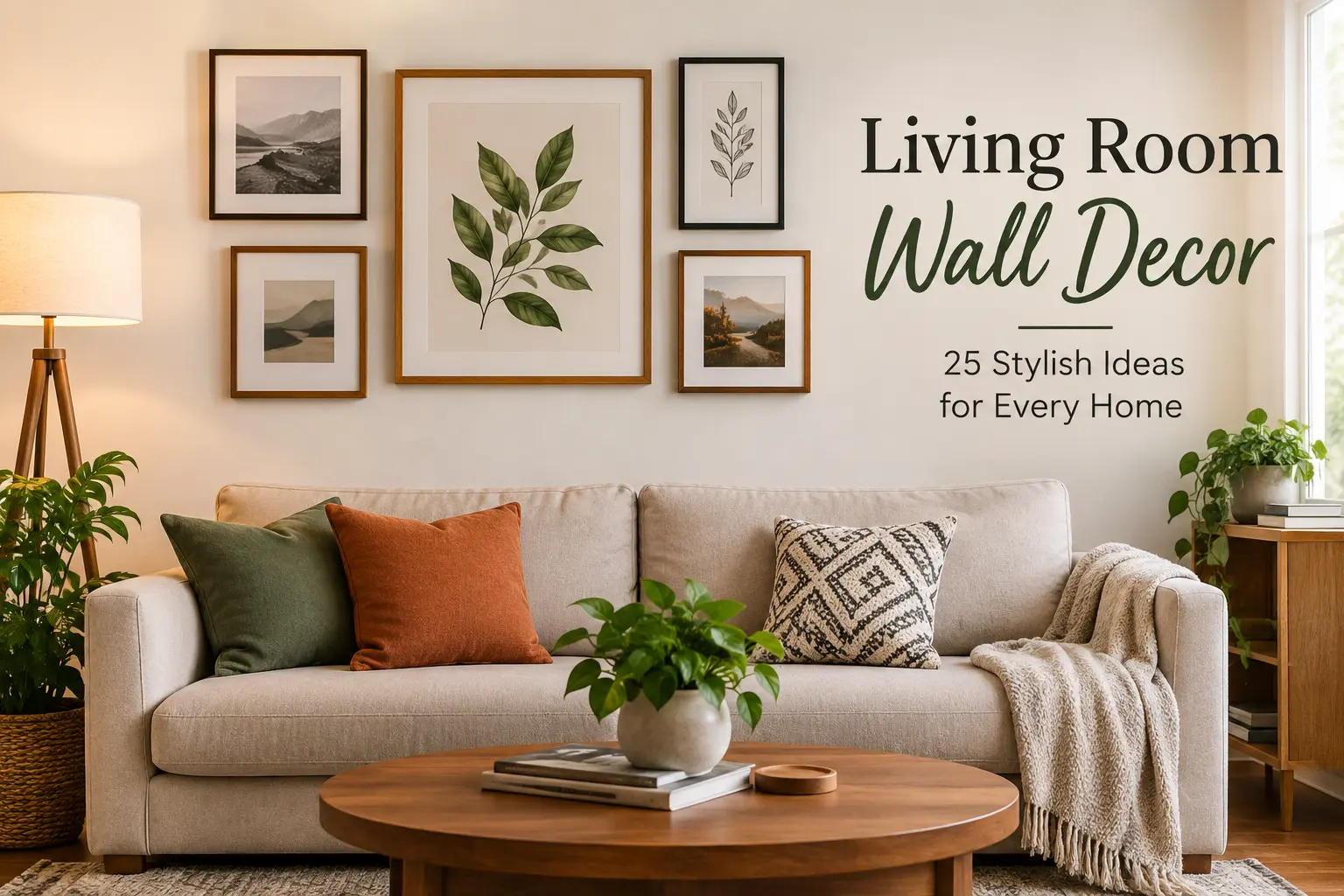
A gallery wall is one of the most versatile ways to decorate a large or medium-sized living room wall. It combines several framed photographs, illustrations, paintings, or prints into a coordinated arrangement.
You can use family photographs, travel memories, abstract artwork, botanical illustrations, or a combination of different subjects.
For a cohesive appearance, choose frames in two or three complementary finishes. Black, white, natural wood, and metallic frames can work well, depending on your interior style.
Before hanging anything, arrange the frames on the floor. Experiment with different layouts until the overall shape looks balanced. You can also cut paper templates to the size of each frame and temporarily attach them to the wall.
2. Hang One Large Statement Artwork
Sometimes, one impressive piece of artwork creates a stronger effect than several small decorations.
A large painting, canvas print, abstract design, or landscape photograph can become the central feature of your living room. This approach is especially useful when you prefer a clean and uncluttered interior.
Choose artwork that complements the colors already present in your sofa, curtains, rugs, or cushions. You can repeat one or two existing colors in the artwork to make the entire room feel coordinated.
Pay attention to scale. A small frame can look lost above a wide sofa, while an oversized piece may overwhelm a narrow wall. As a starting point, consider artwork approximately two-thirds the width of the furniture below it, then adjust according to the room’s proportions.
Hang the artwork at a comfortable viewing height and ensure that it does not interfere with doors, windows, or lighting fixtures.
Large artwork is an excellent choice for homeowners who want attractive living room wall art without creating a complicated arrangement.
3. Use Decorative Wall Mirrors
Mirrors are both practical and decorative. They reflect light, introduce another visual element, and can make some rooms appear more spacious.
A large rectangular mirror can complement contemporary interiors, while a round mirror can soften a room filled with straight furniture lines. Arched mirrors work well in traditional, transitional, and modern interiors.
Consider placing a mirror opposite or near a window so it reflects daylight or an attractive view. Avoid positioning it where it primarily reflects clutter, an unappealing corner, or harsh glare.
You can hang one large mirror above a console table or create a composition using several smaller mirrors.
For safety, select appropriate wall fixings and follow the manufacturer’s installation instructions, especially for heavy mirrors.
If you want to improve the sense of openness in a compact room, mirror decoration can be a practical addition to your living room design.
4. Install Floating Wall Shelves
Floating shelves offer a useful combination of decoration and storage. They allow you to display books, small plants, framed photographs, pottery, and decorative objects without using floor space.
For a modern appearance, choose simple shelves with clean edges. Natural wood adds warmth, while white or black shelves can create a more understated look.
Avoid filling every shelf with objects. Leave some open space between decorative pieces to make the arrangement easier to appreciate.
You can combine different heights of shelves or install two or three shelves in a balanced horizontal arrangement. If you display books, mix upright books with small horizontal stacks to create visual variety.
Always check the wall type and weight limits before installation. Use suitable anchors or secure the shelves to studs where appropriate.
5. Add a Textured Accent Wall
An accent wall adds depth by giving one wall a different finish from the surrounding surfaces.
Depending on your budget and preferred style, you can use textured paint, decorative plaster, wallpaper, wood slats, or wall panels.
A textured wall behind the sofa can become the main visual feature of the room. Neutral shades such as warm beige, soft gray, and cream create a subtle effect, while darker greens, blues, and earthy tones can produce a stronger contrast.
Consider the existing flooring, furniture, and natural light before selecting a finish. A dark accent wall may feel dramatic in a bright room but more enclosed in a poorly lit space.
Choose materials that suit your maintenance requirements. Textured surfaces can collect dust, and some decorative finishes require professional installation.
An accent wall is a useful option when you want a noticeable change without decorating every wall.
6. Decorate with Framed Family Photographs
Family photographs introduce warmth and personal meaning into a living room. They can help create a welcoming environment while displaying important memories.
Choose photographs that share a visual theme, such as family celebrations, outdoor adventures, portraits, or travel experiences.
Matching frames create a formal appearance, while a combination of wood and black frames can feel more relaxed. Black-and-white photographs are another option if you want a consistent look.
Arrange the photographs carefully rather than hanging them randomly. A symmetrical layout can suit traditional interiors, while a more flexible arrangement works well in casual spaces.
Use high-quality prints and frames that protect the photographs from excessive sunlight.
This idea is particularly suitable for people who want personalized wall decor rather than mass-produced decorations.
7. Try Minimalist Wall Art
Minimalist decoration focuses on simplicity, balance, and a limited number of carefully selected elements.
You can create this look with line drawings, geometric prints, understated abstract paintings, or simple botanical artwork.
Choose a restrained color palette, such as black and white, cream and beige, or gray with natural wood. Keep the surrounding wall relatively clear so the artwork receives attention.
Minimalist living room wall decor is especially useful in small apartments, modern homes, and rooms where the furniture already has strong visual features.
You do not need expensive artwork to achieve this style. Affordable prints can work well when they have suitable proportions, clean frames, and colors that complement the room.
The most important principle is to avoid adding decorations simply because a wall looks empty. Each piece should serve a purpose.
8. Use Wallpaper to Introduce Pattern
Wallpaper can change the appearance of a living room without requiring a collection of separate decorations.
Choose from botanical patterns, geometric designs, subtle textures, traditional motifs, or modern abstract prints. The right pattern can introduce movement and connect the wall with your furniture and accessories.
For a balanced result, consider applying patterned wallpaper to one wall rather than covering the entire room. This is particularly useful when you select a bold design.
Small-scale patterns often create a different effect from large, dramatic prints. Examine a sample in your actual room before making a decision, because lighting can change how colors and patterns appear.
Check whether the wallpaper is washable, removable, or suitable for your wall surface.
Wallpaper can be an effective choice for people who want decorative impact without installing shelves or hanging multiple objects.
9. Add Wooden Wall Panels
Wooden wall panels introduce natural texture and warmth. They can suit modern, rustic, Scandinavian, and contemporary interiors.
Vertical slats can make a wall appear taller, while horizontal arrangements can emphasize width. Flat wood panels provide a more traditional finish, and decorative geometric panels create a more distinctive appearance.
You can use real wood, wood veneer, or suitable manufactured alternatives. The right option depends on your budget, moisture conditions, maintenance requirements, and desired finish.
Consider installing panels behind a sofa or on the wall surrounding a television. Keep the surrounding decoration relatively simple if the panels already have a strong pattern.
Before installation, check the manufacturer’s instructions and consider electrical outlets, cables, and ventilation requirements.
Wood panels are particularly useful when you want the wall itself to become a major design feature.
10. Bring Nature Indoors with Botanical Prints
Botanical artwork features leaves, flowers, trees, and other natural subjects. It introduces an organic element without requiring a large number of accessories.
You can choose detailed botanical illustrations, pressed-flower artwork, landscape photography, or abstract plant-inspired designs.
Green, cream, beige, and natural wood often work well together, although colorful floral prints can create a more lively effect.
Arrange two or three related prints above a sofa or place a larger botanical painting on an otherwise empty wall.
For a coordinated interior, repeat colors from the artwork in cushions, curtains, or indoor plants.
Botanical wall art works particularly well in relaxed living rooms, nature-inspired interiors, and spaces that use natural materials.
11. Create a Boho-Inspired Wall
Bohemian interiors often combine natural textures, handmade details, relaxed colors, and objects collected over time.
For boho living room wall decor, consider macrame hangings, woven baskets, wooden frames, handmade pottery, or artwork with earthy colors.
You can combine cream, terracotta, olive green, warm brown, and muted mustard to create a comfortable atmosphere.
The key is to balance variety with consistency. Too many unrelated colors and textures can make the wall feel crowded.
Try grouping three or five decorative elements with different shapes but similar tones. Add one larger piece to anchor the arrangement.
This style works especially well with natural fabrics, wooden furniture, woven rugs, and indoor plants.
12. Display Decorative Wall Baskets
Decorative baskets can provide an alternative to conventional framed art.
Woven baskets introduce texture, organic shapes, and handmade character. They are particularly suitable for bohemian, rustic, coastal, and nature-inspired interiors.
Choose baskets with complementary colors and patterns. Some may have natural straw tones, while others feature darker fibers or subtle dyed details.
Arrange them in a loose cluster rather than a perfectly uniform grid. Start with the largest basket and place smaller pieces around it.
Make sure the baskets are designed for display and are securely mounted. Lightweight options can be easier to install on suitable walls.
This is a practical way to decorate an empty wall if you prefer texture over paintings and photographs.
13. Install Picture Ledges
Picture ledges allow you to display framed artwork without permanently committing to one arrangement.
Unlike conventional floating shelves, picture ledges are often designed with a shallow front edge that helps keep frames in place.
Layer two or three frames at different heights and combine them with a small decorative object or a compact plant where space allows.
You can update the arrangement whenever you want to introduce new artwork or seasonal decorations.
Picture ledges are useful for renters and people who enjoy changing their interiors regularly. However, you should still check whether installation requires drilling and whether your rental agreement permits it.
Keep the arrangement stable and avoid placing heavy objects where they could fall.
14. Decorate Around the Television
The television wall often becomes one of the largest visual features in a living room. Without careful planning, it can look empty or overly dominated by the screen.
You can improve the appearance by installing a simple media console, using subtle wall panels, or adding carefully positioned shelves.
Consider a balanced arrangement rather than placing decorations randomly around the television. Decorative objects should not obstruct ventilation, cables, speakers, or the viewing area.
Neutral wall colors and restrained patterns can help the television blend into the room. Alternatively, a darker background can create a deliberate focal point.
If you use shelves, avoid overcrowding them with small accessories. A few larger objects often create a cleaner appearance.
The best TV wall decor complements the screen rather than competing with it.
15. Choose Farmhouse Wall Decor
Farmhouse interiors combine comfortable materials, practical details, and a relaxed atmosphere.
For farmhouse living room wall decor, consider reclaimed-looking wood frames, simple landscape prints, understated metal accents, and natural textures.
A large wooden frame can complement a neutral sofa, while black metal details add contrast. Soft white, beige, gray, and warm brown are common color choices for this style.
You can create a farmhouse look without filling the room with decorative signs. Artwork, mirrors, shelves, and natural materials can produce a more timeless result.
Choose a few items that match your furniture and avoid mixing too many competing finishes.
This style works particularly well in homes with wooden furniture, linen fabrics, textured rugs, and warm lighting.
16. Use a Large Decorative Clock
A decorative wall clock combines a practical function with visual appeal.
Large clocks can suit farmhouse, industrial, traditional, and contemporary living rooms. Choose the material and finish according to the room’s existing design.
For example, a wooden clock can soften a room with neutral furniture, while a simple black metal design can complement modern interiors.
Check the proportions carefully. A clock that is too small may look disconnected from a large sofa, while an oversized design can overwhelm a narrow wall.
Choose a readable design if you intend to use it to tell time regularly. Also consider ticking sounds if the living room is used for quiet reading or relaxation.
A clock is a good option when you want a single decorative feature with a clear practical purpose.
17. Create a Reading Corner with Wall Shelves
If your living room includes a reading chair, you can use nearby wall space to create a small reading corner.
Install suitable shelves for books, place a reading lamp nearby, and display a few meaningful objects. A framed print or small piece of artwork can help define the area.
Keep frequently used books within easy reach and place heavier items on shelves designed to support their weight.
Choose shelf finishes that complement the chair, side table, or bookcase. Matching materials help the corner feel connected to the rest of the room.
This approach works well in small homes because it uses vertical space rather than requiring a large bookcase.
A thoughtfully arranged reading corner can make your living room more functional and visually interesting.
18. Add Metallic Wall Art
Metal wall art can introduce contrast, texture, and a distinctive decorative feature.
Popular designs include geometric shapes, abstract compositions, botanical outlines, and nature-inspired forms.
Black metal can suit industrial or modern rooms, while brass or gold-colored finishes can complement warmer interiors.
Metallic pieces work best when they connect with other finishes already present in the room. For example, a brass wall decoration may coordinate with a lamp or table hardware.
Avoid adding too many shiny surfaces if the room already contains reflective furniture and accessories.
Check the weight and mounting requirements before installation, particularly for large metal designs.
This option is useful when you want an alternative to conventional canvas prints and framed photographs.
19. Use Mirrors and Artwork Together
Combining a mirror with framed artwork can create a layered and visually balanced wall.
For example, you could place a medium-sized mirror in the center and arrange smaller frames on either side. Another option is to combine a mirror with a picture ledge and a few decorative objects.
Use consistent frame finishes or a shared color palette to connect the different elements.
Be careful not to create excessive reflections. Too many mirrors facing one another can make a room feel visually busy.
Plan the arrangement before drilling holes, and ensure that the pieces are spaced evenly enough to appear intentional.
This idea is particularly useful when you want the practical benefits of a mirror alongside the personality of wall art.
20. Try Color-Blocked Wall Designs
Color blocking involves using distinct areas of color to create a decorative effect.
You might paint a wide rectangle behind a sofa, create a curved shape around a reading corner, or use two complementary colors to divide a wall visually.
Soft beige and white create a subtle appearance, while sage green, terracotta, and muted blue can add more personality.
Use painter’s tape and measure carefully before painting. Test your selected colors in the actual room because natural and artificial light affect how they appear.
Color blocking is often more affordable than installing decorative panels or purchasing large pieces of artwork.
It also allows you to create a customized feature wall that connects with your furniture and accessories.
21. Add a Rustic Brick or Stone Finish
Brick and stone finishes introduce texture and a sense of depth.
Exposed brick can complement industrial and rustic interiors, while stone-inspired finishes can work well in contemporary and natural designs.
If your home does not have an existing brick wall, consider suitable veneer panels, decorative finishes, or realistic wallpaper alternatives.
Select a finish that fits the room’s proportions. A heavily textured wall can become overwhelming in a small space if the surrounding colors and furniture are also dark or busy.
Consider cleaning requirements and installation costs before choosing real masonry or heavy panels.
Use appropriate materials and professional assistance where necessary, especially if the project affects the structure, moisture protection, or electrical installations.
A textured finish can make a plain wall feel more substantial without requiring many additional decorations.
22. Display Travel Memories
Travel-inspired wall decor makes your living room more personal.
You can display framed photographs of favorite destinations, maps, postcards, illustrations, or prints representing places that matter to you.
Choose a consistent style for the display. For example, black-and-white photographs create a more coordinated look, while colorful travel pictures can make the room feel lively.
Arrange the items in a gallery wall or place a few larger frames above a console table.
Avoid displaying every souvenir at once. Select the pieces with the strongest personal meaning and rotate them occasionally.
This idea creates a conversation starter while making your living room reflect your interests and experiences.
23. Use Oversized Typography or Art Prints
Typography-based prints feature letters, words, or short phrases. They can introduce a contemporary element into a living room.
Choose a design that suits your taste and complements the room’s overall style. Simple typography works well in modern spaces, while artistic lettering can suit more eclectic interiors.
You can also use abstract prints, architectural drawings, or graphic illustrations if you prefer artwork without prominent text.
Avoid choosing a print only because it is popular. Consider whether its message, colors, and visual style will continue to suit your room over time.
Large prints should have enough surrounding space to remain visually clear.
When used thoughtfully, typography and graphic art can provide an inexpensive alternative to original paintings.
24. Decorate with Indoor Plant Displays
Plants can introduce natural color and texture into a living room, and wall-mounted planters can help save floor space.
Choose plant varieties that suit the available light and your ability to maintain them. Some plants require bright indirect light, while others tolerate lower-light conditions.
Use suitable planters and mounting systems designed to support the combined weight of the container, plant, and moist growing medium.
Keep water away from electrical outlets and protect the wall from moisture. If maintenance is a concern, realistic artificial plants can offer a lower-maintenance alternative.
Combine a few plants with simple artwork or natural wood shelves for a coordinated appearance.
A plant display works particularly well in interiors that use natural colors, woven textures, and wooden furniture.
25. Make Your Own DIY Wall Decor
DIY projects allow you to personalize your living room without relying entirely on store-bought decorations.
You can create abstract paintings, frame fabric samples, design paper art, reuse suitable wood, or turn meaningful photographs into a decorative display.
Start with a manageable project and choose materials appropriate for your skill level. Prepare the wall and work area properly, and follow product instructions when using paint, adhesives, or cutting tools.
For a coordinated result, select colors that appear elsewhere in your room.
You can also reuse existing frames by changing their contents or refinishing their surfaces. This reduces waste and may save money.
DIY living room wall decor is especially appealing if you want a distinctive design that reflects your personality and budget.
How to Choose the Right Wall Decor for Your Living Room
Choosing attractive decorations becomes easier when you consider the room as a whole rather than selecting each object independently.
Consider the Size of Your Wall
The size of your wall should influence the number, scale, and arrangement of decorations.
A large wall can accommodate an oversized painting, a gallery wall, or a combination of artwork and shelves. A narrow wall may look better with one vertical print or a small arrangement of frames.
Measure the available area before buying anything. Remember to account for furniture, windows, doors, and wall-mounted equipment.
If you are unsure about proportions, create paper templates and temporarily place them on the wall. This allows you to test different arrangements without making unnecessary holes.
Match the Decor to Your Interior Style
Your decorations should complement the furniture and materials already present.
Modern rooms often suit clean lines, restrained colors, and abstract artwork. Traditional interiors may work well with landscapes, framed prints, and decorative mirrors. Bohemian spaces can accommodate woven textures, handmade objects, and layered arrangements.
You do not have to follow one style strictly. However, repeating a few materials, colors, or shapes can help different elements feel connected.
Select a Coordinated Color Palette
Color is one of the easiest ways to create harmony.
Start with the colors already present in your sofa, flooring, curtains, and rugs. Then choose wall decorations that repeat or complement those colors.
Neutral artwork can soften a colorful room, while a bright print can add interest to a more restrained interior.
Before making a final decision, view samples under both daylight and evening lighting.
Think About Your Budget
You can create attractive wall decor at different price points.
Affordable options include printable artwork, secondhand frames, DIY paintings, simple picture ledges, and carefully arranged photographs. Higher-budget options might include original artwork, custom framing, professionally installed wall panels, or bespoke finishes.
Set a budget before shopping and include installation materials when estimating the total cost.
Spend more on the elements that matter most to you, rather than assuming every decoration needs to be expensive.
Small Living Room Wall Decor: Tips for Compact Spaces
Small rooms require a slightly different approach because too many decorations can make the space feel crowded.
First, consider using one larger piece of artwork instead of a large number of small objects. A well-proportioned focal point can create a clearer visual arrangement.
Second, use vertical space carefully. Floating shelves and tall artwork can draw attention upward while preserving floor space.
Third, consider mirrors where they reflect daylight or an attractive part of the room. Avoid placing them where they create distracting reflections.
Fourth, keep the color palette reasonably consistent. Light colors can help a room feel open, although darker colors can also work when used deliberately.
Finally, avoid installing deep shelves in narrow walkways or placing heavy objects above seating without appropriate support.
The best small living room wall decor is not necessarily the simplest. It is the arrangement that adds personality while allowing the room to remain comfortable and functional.
Living Room Wall Decor on a Budget
A beautiful living room does not require a large decorating budget. Small, thoughtful improvements can make a meaningful difference.
Reuse existing frames. Replace outdated prints with photographs, illustrations, or inexpensive artwork.
Create your own artwork. Abstract shapes and simple color combinations can look effective when they suit your interior.
Shop secondhand. Suitable frames, mirrors, and decorative objects may be available through resale shops or local marketplaces.
Use picture ledges. These allow you to change artwork without creating new mounting points for every frame.
Paint one wall. A carefully chosen accent color may create more impact than several unrelated decorations.
Display meaningful objects. Travel photographs, handmade crafts, and family memories can make a room feel personal without requiring expensive purchases.
Decorate gradually. You can start with one main feature and add complementary pieces later. This gives you time to decide what the room actually needs.
Always check the condition and safety of secondhand items, especially mirrors, electrical lighting, and wall-mounted hardware.
Common Living Room Wall Decorating Mistakes to Avoid
Even attractive decorations can look awkward if they are poorly positioned or unsuitable for the room.
Hanging Artwork Too High
Artwork that sits too close to the ceiling can appear disconnected from the furniture below it. Position it at a comfortable viewing height and consider the relationship between the frame and the sofa or console table.
Choosing Decorations That Are Too Small
Tiny frames may disappear on a large empty wall. Select artwork and arrangements that suit the dimensions of the available space.
Using Too Many Different Colors
A collection of unrelated colors can make the room feel disorganized. Repeat a few shades from the furniture, rugs, and accessories to create a more unified appearance.
Overcrowding Shelves
Filling every available shelf with books and accessories can make the wall look cluttered. Leave some empty space and display only the items that contribute to the arrangement.
Ignoring Lighting
A beautiful painting may appear dull in a poorly lit corner. Consider natural light, room lighting, and suitable picture lighting where needed.
Protect valuable artwork from direct sunlight and avoid installing lighting that creates excessive glare.
Forgetting Safety
Heavy mirrors, shelves, and artwork need suitable mounting hardware. Check the wall construction, product weight, and manufacturer’s installation instructions before hanging anything.
If the wall contains hidden wiring or plumbing, use appropriate detection methods or seek professional assistance before drilling.
Following Trends Without Considering Your Needs
Popular decorating styles can provide inspiration, but they should not dictate every decision.
Choose decorations that suit your home, budget, habits, and personal taste. A comfortable and functional living room is more valuable than a room filled with accessories that are difficult to maintain.
Frequently Asked Questions About Living Room Wall Decor
What is the best wall decor for a living room?
The best wall decor depends on the size, style, and lighting of your room. Large artwork, gallery walls, mirrors, floating shelves, and accent walls are versatile options. Choose pieces that complement your furniture and fit the available space.
How do I decorate a large empty living room wall?
A large empty wall can accommodate a statement painting, a gallery wall, decorative panels, or a combination of shelves and artwork. Measure the wall first and choose a design that balances the furniture beneath it.
How can I decorate my living room walls cheaply?
Affordable options include DIY artwork, framed photographs, reused frames, printable art, picture ledges, and a painted accent wall. Start with one focal point and add complementary decorations gradually.
Which wall decor is best for a small living room?
A well-sized artwork, a carefully positioned mirror, vertical prints, and shallow floating shelves can work well in compact rooms. Avoid overcrowding the walls or using shelves that interfere with movement.
Should wall art match my sofa?
Wall art does not need to match the sofa exactly. However, repeating one or two colors from the sofa, cushions, rug, or curtains can create a coordinated appearance.
How high should artwork hang above a sofa?
As a general starting point, leave approximately 6–10 inches between the bottom of the frame and the top of the sofa. Adjust this distance according to the artwork’s size and the room’s proportions.
Are gallery walls still a good decorating choice?
Gallery walls remain a flexible way to display photographs, prints, and artwork. A coordinated selection of frames, subjects, or colors can make the arrangement feel intentional rather than cluttered.
Can I mix mirrors and artwork on one wall?
Yes. Mirrors and artwork can complement each other when their shapes, finishes, and spacing are planned carefully. Test the arrangement before installation and avoid excessive reflections.
What colors work best for living room wall decor?
Neutral shades, earthy colors, muted greens, blues, and black-and-white combinations can all work well. The best choice depends on your existing furniture, lighting, and preferred design style.
How do I make my living room walls look modern?
Try clean-lined artwork, simple mirrors, restrained color palettes, floating shelves, subtle textured finishes, or carefully planned accent walls. Focus on proportion and balance rather than adding too many decorations.
Conclusion
The right living room wall decor can make your home feel more welcoming, organized, and personal. You can create an impressive feature with a single statement painting, bring warmth through wooden panels, introduce texture with woven baskets, or display meaningful memories in a gallery wall.
The most successful design begins with understanding your space. Consider the size of the wall, the position of your furniture, the available light, and the colors already present in the room. Then select decorations that support your preferred style and fit your budget.
You do not need to complete every wall at once. Start with one area, test your arrangement, and make adjustments as needed.
Whether you prefer modern living room wall decor, minimalist artwork, farmhouse details, or creative DIY projects, choose elements that reflect your personality and make the room comfortable to use. A thoughtful arrangement of a few well-selected pieces can have a greater impact than a wall filled with unrelated decorations.
