

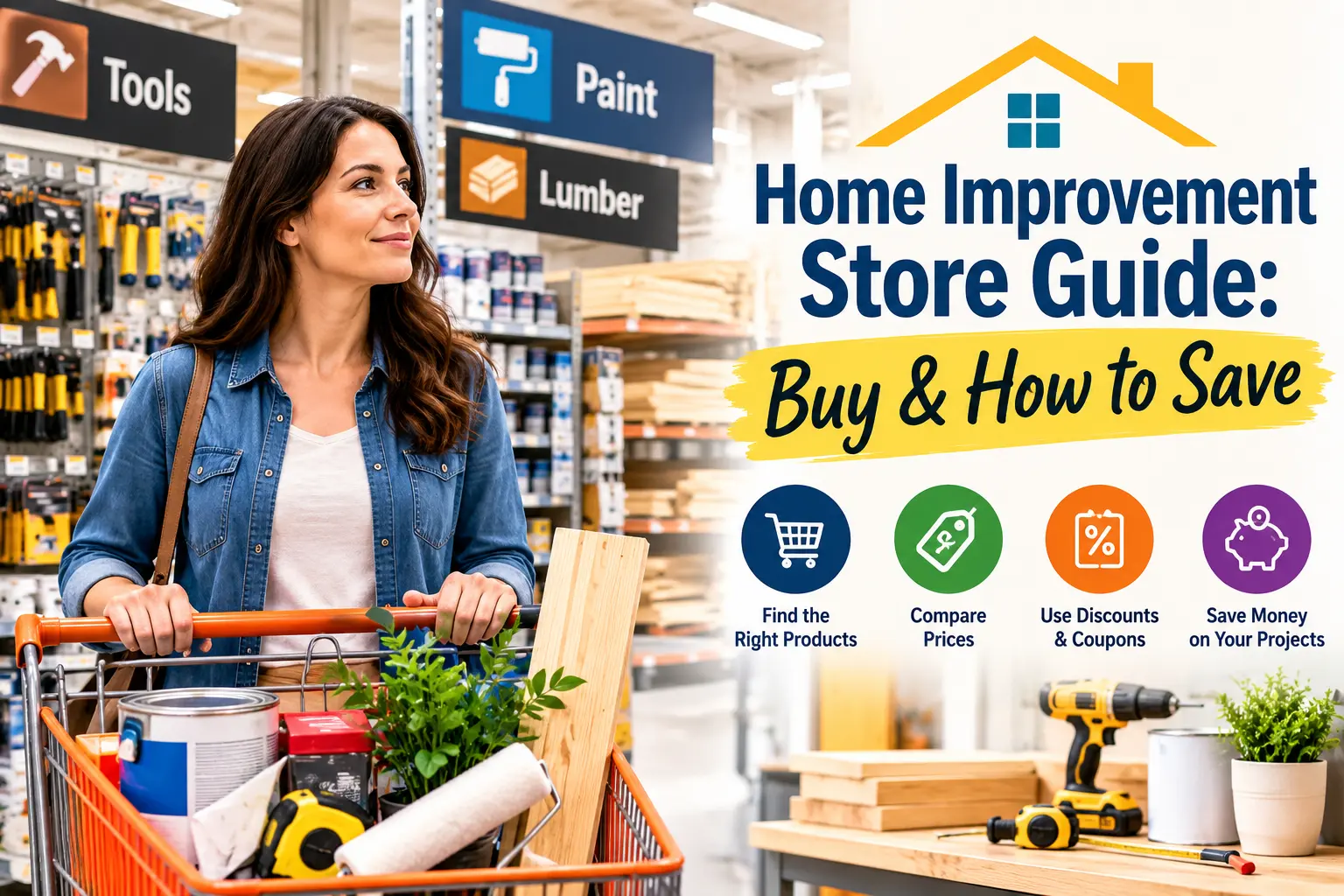
Every home needs care. A leaky tap, a peeling wall, a loose door handle, or a messy garden can show up at any time. When that happens, the first place most people think of is the home improvement store.
A home improvement store is a big shop that sells almost everything you need to fix, build, or upgrade your home. You can walk in with a small problem and walk out with a plan, the right tools, and the right parts. But a home improvement store can also feel huge and confusing, especially if it is your first visit.
This guide will make it easy. You will learn what a home improvement store is, what it sells, how to pick the right one, how to save money, and how to avoid common mistakes. We use simple words and clear steps, so anyone can follow along. Whether you are painting a room for the first time or planning a full kitchen update, this guide is for you.
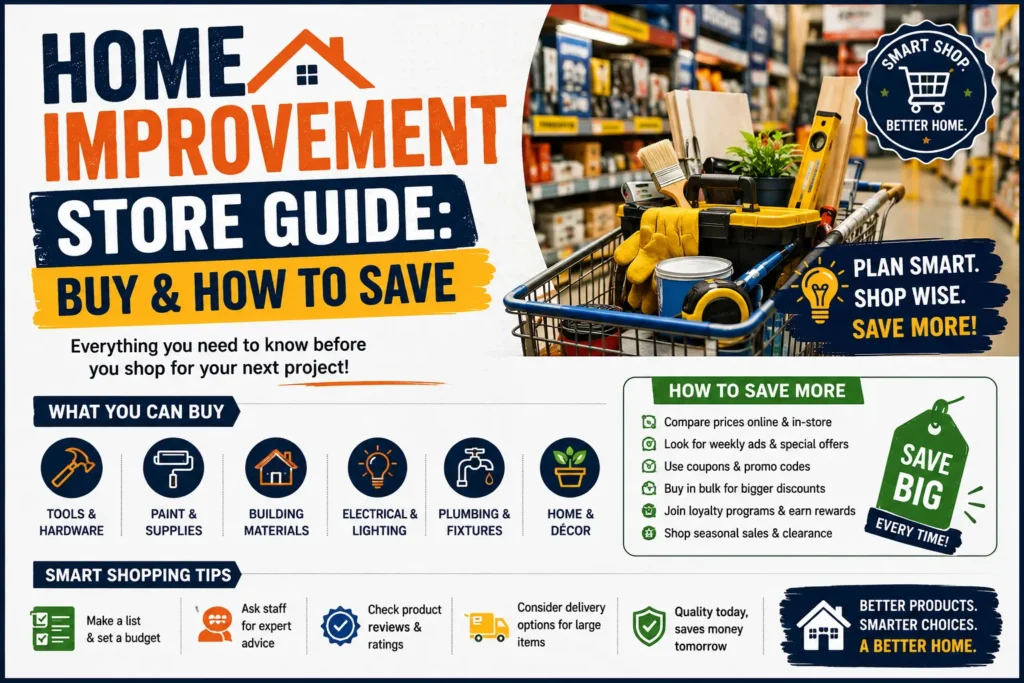
What Is a Home Improvement Store?
A home improvement store is a shop that sells building supplies, tools, and products for the house and yard. Some people call it a home center or a hardware superstore. It mixes two older kinds of shops. One is the hardware store, which sells small tools, nails, and screws. The other is the lumber yard, which sells wood and large building materials.
Today, a home improvement store does much more than that. In one visit you can buy paint, flooring, light bulbs, garden soil, kitchen cabinets, door locks, and even a new washing machine. Many stores also give advice, offer delivery, and rent out big tools.
That is why people love them. Instead of driving to five different shops, you can find most things in one place.
A Short Look at Where Home Improvement Stores Came From
The idea of the modern home improvement store is more than a hundred years old. In the early 1900s, people could order kits to build whole houses by mail. This worried local shops that sold wood and building parts. Over time, those shops learned to offer more goods and better service to keep their customers.
They cleaned up their yards, trained friendly staff, built showrooms, and moved to busier parts of town. They also began to welcome more women as shoppers, which changed how stores looked and felt.
In the late 1900s, huge “big box” stores arrived. They were much larger than the old shops and had a very wide choice of goods under one roof. This is the style most of us know today. The change made home projects easier and cheaper for ordinary families.
Famous Home Improvement Store Brands Around the World
Different countries have different well-known stores. Here are some of the main names.
In the United States
The biggest names are Home Depot, Lowe’s, and Menards. Home Depot was started in 1978 in Georgia and is known as the largest home improvement retailer in the country. It serves both everyday home owners and professional builders. Lowe’s is another very large chain with stores in many states. Menards is strong in the Midwest and is known for an extra twist, because some stores also sell a small range of groceries.
In Canada
Rona is a well-known name in Canada. It has been a main choice for many families who want tools, paint, and building goods close to home.
In the United Kingdom
B&Q is the biggest home improvement retailer in the UK, with hundreds of stores. Wickes is another big name, also with hundreds of stores across the country.
Each brand has its own style, prices, and special products. It is a good idea to visit more than one so you can see which one fits your needs best.
What Can You Buy at a Home Improvement Store?
These stores are split into sections, often called departments or aisles. Knowing the main ones will help you move fast and stay calm.
Tools and Hardware
This is the heart of the store. You will find hammers, screwdrivers, drills, saws, tape measures, and ladders. You will also see small items like nails, screws, bolts, hooks, and hinges. Many stores sell both hand tools and power tools. Power tools can be plugged in or run on batteries.
Paint and Painting Supplies
The paint aisle has cans of paint in thousands of colors. Most stores can mix a color for you on the spot. You can also buy brushes, rollers, trays, tape, drop cloths, and cleaners. If you are painting a room, almost everything you need is in this one aisle.
Lumber and Building Materials
In this area you will find boards, plywood, beams, concrete, bricks, and drywall sheets. These are used for building decks, fences, shelves, and walls. Many stores will cut wood to size for you, which saves time and effort.
Flooring
Flooring choices include tile, wood, laminate, vinyl, and carpet. Many stores let you take free samples home. This is helpful because a floor can look different in your own light.
Plumbing
The plumbing section has taps, pipes, valves, sinks, toilets, and water heaters. It also has small repair parts like washers and seals, which can fix many leaks for just a few dollars.
Electrical
Here you will find wires, switches, plugs, light bulbs, fans, and light fixtures. You will also see tools like testers that help you check if power is on or off. For big electrical work, it is wise to hire a licensed electrician.
Kitchen and Bath
Many stores have display kitchens and bathrooms. You can see cabinets, counters, sinks, mirrors, and shower parts set up like a real room. This makes it easier to picture the final look.
Doors, Windows, and Locks
You can buy new doors, windows, door handles, and security locks. Some stores also sell smart locks and video doorbells.
Garden and Outdoor
This area sells plants, seeds, soil, mulch, lawn mowers, hoses, and outdoor furniture. In spring and summer, it often grows to fill a large part of the store.
Heating, Cooling, and Appliances
Fans, heaters, air conditioners, and large appliances like fridges and washing machines are often sold too. Some stores also sell filters and small parts for these machines.
Storage and Organization
Shelves, boxes, hooks, racks, and garage storage systems are great for making your home neat. These items can change how a space feels without a big project.
Services You May Not Know About
A home improvement store is not just about products. Many also offer helpful services. Check what your local store offers, because services can differ from place to place.
- Free advice: Store staff can often explain which tool or part you need. Do not be shy about asking.
- Workshops and how-to classes: Some stores hold free or low-cost lessons on topics like tiling, painting, or basic repairs.
- Tool rental: If you only need a big tool once, such as a floor sander or a pressure washer, you can rent it for a day instead of buying it.
- Delivery: Heavy items like lumber, tiles, and appliances can often be delivered to your home for a fee.
- Paint matching: Bring a small chip or a photo, and the store can often match the color.
- Cutting services: Wood, pipes, and some other items can be cut to size in the store.
- Installation help: Some stores offer to install things like flooring, windows, or appliances for you, or can connect you with a trusted installer.
- Design help: For larger projects like kitchens, designers can help you plan and give price quotes.
- Key cutting and small repairs: You can often get spare keys made or screens fixed in minutes.
Big Chain Store or Local Hardware Shop?
Before you decide where to shop, it helps to compare the two main choices.
Big Chain Home Improvement Store
Good points:
- A very wide choice of products
- Often lower prices because they buy in large amounts
- Many services like delivery and tool rental
- Easy to check stock online
- Useful for large projects with many parts
Not-so-good points:
- The store can feel huge and busy
- Staff may not always know every product well
- Long walks between aisles
Small Local Hardware Shop
Good points:
- Friendly, personal help
- Staff who often know the local area and its needs
- Faster in and out for small jobs
- Good for odd or old parts that big stores do not carry
Not-so-good points:
- A smaller range of products
- Prices can be a bit higher
- Fewer services
A smart plan is to use both. Buy big items and large amounts at the chain store. Go to the local shop for small parts, repairs, and quick advice.
How to Choose the Right Home Improvement Store
Not every store is right for every person. Here are simple things to think about.
1. Distance and ease of travel: A closer store saves time and fuel. This matters most when you make many trips during a project, which is very common. Even a small repair can need two or three visits.
2. Product range: Check if the store carries the brands and items you want. Look at the website before you go.
3. Price: Compare prices on a few key items such as paint, tools, and tiles. Do not judge by one product alone.
4. Staff help: Good staff can save you from costly mistakes. Visit once and ask a simple question. See how they answer.
5. Return rules: Check what happens if you buy the wrong thing. Many stores allow returns on unused goods with a receipt, but rules can differ for special orders, cut items, and mixed paint.
6. Online tools: Some stores have helpful apps and websites. You can check stock, build a shopping list, and sometimes pay before you arrive.
7. Pickup and delivery options: If you have a small car, home delivery can be a big help for long boards or heavy bags.
8. Trade or pro counters: If you work with a builder or do many jobs, ask about special pro services and bulk prices.
How to Find a Good Home Improvement Store Near You
If you are searching for a store close to home, start with a map app. Type “home improvement store” or “home improvement store near me” and you will see a list of nearby options with ratings and reviews. Look at the opening hours too, because some stores close earlier on weekends.
Review sites and local community groups can also give honest opinions. Pay attention to comments about stock levels, staff help, and how easy returns are. A store with many good, recent reviews is usually a safe choice.
Before You Go: A Simple Shopping Plan
A little planning makes a big difference. Follow these steps before you leave home.
Step 1: Define your project: Write down exactly what you want to do. For example, “Paint the living room walls” or “Fix the leaking bathroom tap.”
Step 2: Measure everything: Measure the walls, floor, window, or space. Write the numbers down. Take a photo too. Wrong measurements are one of the top reasons people return items.
Step 3: Make a list: Write the tools, parts, and materials you need. Add extra items for small things like tape, gloves, or screws.
Step 4: Set a budget: Decide how much you can spend. Add about ten percent extra for surprises. Projects often cost a little more than planned.
Step 5: Check stock online: Many stores show if an item is in stock at your local branch. This can save you a wasted trip.
Step 6: Bring helpful items: Take your measurements, photos, old parts that you need to match, and your list. If you are matching a paint color, bring a small chip.
Step 7: Plan your car space: If you are buying long or heavy goods, check if they will fit. If not, plan for delivery.
Smart Ways to Save Money at a Home Improvement Store
Home projects can add up quickly. These simple habits can help you keep costs low.
Compare Prices
Check two or three stores or websites for big items. Some stores will match a lower price if you show proof, so ask about their price match rules.
Shop Sales and Seasons
Stores often run big sales around holidays and at the end of seasons. Paint, tools, and appliances often go on sale at certain times of the year. Garden items are usually cheaper in late summer and fall. Heaters often cost less in spring.
Look for Clearance and Open-Box Items
Some shops have a clearance aisle with discounted goods. Open-box and returned items can also be much cheaper. Check them carefully for damage and missing parts.
Check the “Oops” Paint Shelf
Many paint departments sell paint that was mixed by mistake or returned at a lower price. If you find a color you like, it can be a great deal for small rooms or furniture.
Join Free Loyalty or Rewards Programs
Many stores have free programs with coupons and special deals. If you shop there often, this can add up.
Buy Store Brands
Store brands are often cheaper than famous brands and can be of good quality. Read reviews first to be sure.
Rent Instead of Buy
If you will only use a tool once, renting is often cheaper. Compare the rental cost to the buying price before you decide.
Buy the Right Quality
The cheapest item is not always the best deal. A very cheap tool might break fast. A good middle-priced tool that lasts for years is often better value. For one-time jobs, a basic tool may be fine.
Avoid Impulse Buys
Stores are designed to catch your eye. Stick to your list and your budget. If you see something tempting, wait a day and think about it.
Buying Tools: What Every Home Should Have
You do not need a big tool collection to start. A small starter kit can handle many small repairs. Here is a simple list to begin with:
- A claw hammer
- A set of screwdrivers, both flat and star shaped
- A tape measure
- A spirit level, to check if things are straight
- Pliers and an adjustable wrench
- A utility knife
- A cordless drill with a set of bits
- A small saw
- Safety gloves and safety glasses
- A stud finder, to find the strong parts of a wall
- A flashlight
Add more tools when a project needs them. Remember, you can always rent special tools.
Easy Project Ideas and What to Buy for Each
If you are new to home projects, start small. Here are a few ideas with shopping lists.
Project 1: Paint a Room
What to buy: Paint, primer if needed, brushes, rollers, a tray, painter’s tape, drop cloths, filler for small holes, sandpaper, and a ladder.
Tip: Buy a small sample can first and test the color on the wall. Look at it in morning and evening light.
Project 2: Fix a Leaking Tap
What to buy: Replacement washers or a cartridge, an adjustable wrench, plumber’s tape, and a screwdriver.
Tip: Take a photo of the tap or bring the old part to match it. Shut off the water supply before you start.
Project 3: Hang Shelves
What to buy: Shelves and brackets, wall plugs, screws, a drill, a level, and a stud finder.
Tip: Mark the spot with a pencil and check it with the level before you drill.
Project 4: Update Cabinet Handles
What to buy: New handles or knobs, a screwdriver, and a small drill if you need new holes.
Tip: Measure the distance between the old screw holes so the new handles fit.
Project 5: Start a Small Garden
What to buy: Pots or raised beds, soil, seeds or young plants, a watering can or hose, and gardening gloves.
Tip: Pick plants that suit your amount of sun and your climate.
Project 6: Improve Home Lighting
What to buy: Energy saving LED bulbs, new light fixtures, or plug-in lamps.
Tip: LED bulbs use less power and last much longer than old bulbs. Check the brightness and color on the box.
Project 7: Seal Gaps and Drafts
What to buy: Weatherstrip, caulk, a caulk gun, and door sweeps.
Tip: Sealing gaps around windows and doors can help keep your home comfortable and may lower energy bills.
Project 8: Refresh a Bathroom
What to buy: Caulk, new grout or grout cleaner, a new shower head, a toilet seat, and a mirror or towel hooks.
Tip: Small changes can make a bathroom feel new without a big cost.
DIY or Hire a Professional?
A home improvement store can help you with both. But it is important to know which jobs you can do yourself and which need an expert.
Good jobs for DIY:
- Painting
- Hanging shelves and pictures
- Changing taps, shower heads, and light bulbs
- Replacing cabinet handles
- Basic garden work
- Putting together furniture
Jobs that often need a professional:
- Major electrical work
- Gas pipes and gas appliances
- Roof repairs
- Large structural changes, such as taking down a wall
- Large plumbing changes
These jobs can be dangerous or against local rules if not done correctly. Many areas also require permits for large work. When in doubt, ask a licensed expert. Your local store may be able to point you to trusted installers.
Safety Tips When Shopping and Working
Safety is important at every step.
- Wear protection: Use gloves, safety glasses, and ear protection when you work with tools. Use a dust mask when you sand or cut.
- Read the labels: Paints, glues, and cleaners may have warnings. Make sure the room has fresh air.
- Lift with care: Bags of cement, soil, and tiles are heavy. Bend your knees and ask for help or a cart.
- Secure loads: If you carry long boards in your car, tie them well and use a flag on the end.
- Use ladders properly: Place them on flat ground and never stand on the top step.
- Turn off power and water: Before you work on wires or pipes, switch off the supply and test it.
- Keep kids and pets away: Tools, chemicals, and small parts can be harmful.
- Follow the instructions: Each product comes with directions. They are there for a reason.
Online Shopping vs. In-Store Shopping
Most home improvement stores let you shop both ways. Each has benefits.
Shopping Online
- You can compare many products and prices from home.
- You can read customer reviews.
- You can order heavy items for delivery.
- You can pick up your order in store, often within a short time.
Shopping In-Store
- You can see and touch products, which helps with items like tools, tiles, and paint colors.
- You can ask staff for advice.
- You can take samples home.
- You can take items home the same day.
A good mix works well. Research online, check stock, and then visit the store to see items in person or pick up your order.
Is a Department Store a Home Improvement Store?
People often ask if shops like Target can be used for home improvement. These shops sell home goods like storage boxes, lamps, curtains, small decor, and cleaning supplies. They are helpful for light updates and organization.
But they usually do not carry heavy building materials, power tools, or special hardware. For real repair and building work, a dedicated home improvement store is the better choice. Use both for the best result: a department store for style items, and a home improvement store for the serious supplies.
Common Mistakes to Avoid
Even experienced people make mistakes. Here are the most common ones, and how to avoid them.
1. Not measuring first: Always measure twice and buy once. Add a little extra for waste, especially with tiles, wood, and flooring.
2. Skipping the list: Without a list, it is easy to forget items. Then you need extra trips.
3. Buying the wrong size or type: Screws, pipes, and bulbs come in many types. Bring an old one or take a photo to match.
4. Ignoring the batch number: Tiles, paint, and wallpaper can vary slightly between batches. Buy all you need at the same time and check the batch numbers.
5. Forgetting small supplies: Tape, sandpaper, gloves, and drop cloths are easy to forget but needed.
6. Choosing only by price: The cheapest option can cost more later if it breaks or does not last.
7. Rushing the job: Take your time. Read the instructions. A calm, steady pace gives a better result.
8. Not asking for help: Store staff are there to help. A two-minute question can save hours of work.
9. Throwing away the receipt: Keep your receipt and packaging until the project is finished, in case you need to return something.
10. Skipping safety steps. No project is worth an injury.
Tips for First-Time Shoppers
If you are new to home improvement stores, these tips will help you feel at ease.
- Go at a quiet time: Weekday mornings are often less busy than weekends.
- Look at the store map or sign boards: Most stores have clear aisle signs. Many also have a store app or kiosk to find items.
- Ask for a cart or trolley: Even small projects can fill your arms quickly.
- Take your time: There is no need to rush. Read labels and compare.
- Take photos: Photos of your shopping list, shelves, and product labels help you remember details later.
- Learn the language: If you do not know a term, ask. Staff expect questions.
- Start small: Pick a small, easy project first to build your confidence.
Making Your Home Greener and Cheaper to Run
Home improvement stores also sell products that can help you save energy and water. Here are some easy choices.
- LED bulbs: They use less power and last longer.
- Smart thermostats: These help control heating and cooling better.
- Low-flow shower heads and taps: They use less water.
- Insulation: Good insulation keeps heat inside in winter and outside in summer.
- Weatherstripping and caulk: These close up gaps that waste energy.
- Energy efficient appliances: Look for energy rating labels.
- Low-fume paints: These can be better for indoor air.
These upgrades may cost a little at first, but they can bring lower bills over time.
Seasonal Shopping Guide
What you need changes with the seasons. Plan ahead to avoid last minute rushes.
- Spring: Garden supplies, cleaning products, paint, and outdoor furniture.
- Summer: Fans, outdoor lighting, lawn care, and deck repair supplies.
- Fall: Rakes, leaf bags, weather sealing, and heating filters.
- Winter: Heaters, snow tools, salt, pipe insulation, and indoor project supplies.
Buying items early in the off season can also give you lower prices.
Frequently Asked Questions
What is a home improvement store?
A home improvement store is a large shop that sells tools, building materials, paint, plumbing parts, flooring, garden items, and more. It helps people repair, build, and upgrade their homes.
What is the biggest home improvement store?
In the United States, Home Depot is known as the largest home improvement retailer. In the UK, B&Q is the largest. Each country has its own main names.
Can I return items to a home improvement store?
Most stores allow returns on unused items within a set time, usually with a receipt. Special orders, cut materials, and mixed paint often cannot be returned. Always check the store’s return rules before you buy.
Do home improvement stores offer delivery?
Many do. Delivery is useful for heavy or long items. Fees and times depend on the store and the size of the order.
Can I rent tools at a home improvement store?
Many stores rent out tools such as sanders, saws, and pressure washers. Rental is a smart choice if you only need a tool once.
Is it cheaper to shop online or in-store?
Prices can be the same, but online shopping makes it easier to compare. Some online deals are not available in store, and some store deals are not online. Check both.
How do I find a home improvement store near me?
Use a map app and search for “home improvement store near me.” You will see nearby stores, reviews, and opening hours. You can also check the store’s website to see local branches and stock.
What should I buy first for a new home?
Start with a basic tool kit, a ladder, light bulbs, cleaning supplies, locks if needed, and safety items like smoke alarms. Then add items as your projects grow.
Are store brands good?
Many store brands offer good quality at a lower price. Read reviews and compare features before you decide.
Can beginners shop at a home improvement store?
Yes. These stores are made for everyone, from first-time home owners to professional builders. Staff can help you find what you need.
Final Thoughts
A home improvement store can feel big at first, but it is really just a helpful tool for your home. With a little planning, a clear list, and a few smart habits, you can shop with confidence and save time and money.
Start by knowing your project. Measure carefully, set a budget, and write down what you need. Compare stores, ask staff for advice, and use services like delivery, tool rental, and paint matching. Choose quality where it counts, and do not forget safety.
Most of all, enjoy the process. Every small repair and upgrade makes your home more comfortable and more like you. The next time something needs fixing, you will know exactly where to go and what to do. Your local home improvement store is ready to help you build, repair, and improve, one project at a time.
